Americas Joints
JOURNAL
What Purple Sweet Potatoes in Japan Taught Me About Aging and Movement!
I'd never heard of hyaluronan or connected what I eat to how I move—until curiosity led me down an unexpected path.

My name is Margaret, and for most of my sixties, I believed certain things were simply non-negotiable facts of aging.
The mornings that took longer to get started.
The careful way I'd lower myself into chairs.
The mental calculations before agreeing to any activity that involved standing, walking, or moving for extended periods.
"I Kept Asking Myself, 'What Was I Doing Wrong...?'"
I thought this was just how life worked after a certain age.
Everyone around me seemed to be experiencing similar changes, so I assumed we were all on the same inevitable trajectory.
What I didn't know—what nobody had ever mentioned to me—was that there's actual biology behind these changes.
And that understanding it might offer a different perspective entirely.
It started with a conversation over coffee.
My college roommate mentioned she'd been reading about hyaluronan, a molecule our bodies naturally produce that plays a crucial role in joint cushioning and ease of movement.
I'd never heard the word before.
She explained that as we age, our bodies produce less of it.
The decline is gradual, natural, and happens to everyone—but it's not something most people ever learn about or think to question.
That single piece of information sparked something in me.
If our bodies produce less of this cushioning molecule over time, I wondered, is there anything we can do to support what we're losing?
I started researching.
Not looking for miracles or quick fixes—just trying to understand what was actually happening inside my joints and why movement had become so much more challenging.
That's when I discovered something that genuinely surprised me.
Hyaluronan isn't only produced by our bodies—it's also present in certain foods. And one of the richest natural sources? Purple sweet potatoes.
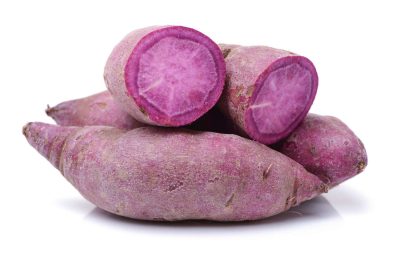
These aren't exotic or hard to find.
They're a staple food in parts of Japan, particularly in communities known for having high numbers of active seniors well into their seventies, eighties, and even nineties.
I found myself reading about traditional Yuzuriharan diets, where purple sweet potatoes have been eaten daily for generations.
Not as medicine or supplements, but simply as food—part of everyday meals that have sustained remarkably active aging populations.
The connection fascinated me.
"I Never Expected Something So Simple to Make Such a Difference"
Could something as ordinary as a purple sweet potato really be linked to how our joints function and how we experience aging?
I'm not a scientist, and I'm not making medical claims.
But learning about hyaluronan and its dietary sources completely reframed how I think about my body, my choices, and what's possible as I age.
This isn't about a single product or a guaranteed outcome.
It's about information I wish I'd known decades earlier—a perspective on aging that nobody ever offered me until I got curious enough to ask questions.
I watched a short video that walks through everything I learned: what hyaluronan is, why it matters, where it's found in traditional diets, and why understanding this changed how I approach my own aging process.
If you've ever felt like slowing down was just inevitable, or if you're curious about what else might be possible when you understand the biology behind aging, this video might offer a perspective worth considering.
"Watch the free video to explore what I discovered about hyaluronan, purple sweet potatoes, and a new way to think about aging"
This site contains affiliate links. Results vary and are not guaranteed. The information provided is for educational purposes only and is not intended to diagnose, treat, cure, or prevent any disease.
Centers for Disease Control and Prevention. Morbidity and Mortality Weekly Report. March 10, 2017. Vol. 66. No. 9.
Sawitzke AD, Shi H, Finco MF, Dunlop DD, Bingham CO 3rd, Harris CL, Singer NG, Bradley JD, Silver D, Jackson CG, Lane NE, Oddis CV, Wolfe F, Lisse J, Furst DE, Reda DJ, Moskowitz RW, Williams HJ, Clegg DO. The effect of glucosamine and/or chondroitin sulfate on the progression of knee OA: a report from the glucosamine/chondroitin arth intervention trial. Arth Rheum. 2008 Oct;58 (10):3183-91. doi: 10.1002/art.23973.
Ian J. Wallace, Steven Worthington, David T. Felson, Robert D. Jurmain, Kimberly T. Wren, Heli Maijanen, Robert J. Woods, and Daniel E. Lieberman. Knee OA has doubled in prevalence since the mid-20th century. Anthropology. August 14, 2017. doi.org/10.1073/
Tamer TM. Hyaluronan and synovial joint: function, distribution and healing. Interdiscip Toxicol. 2013;6(3):111-125. doi:10.2478/intox-2013-0019.
Necas, J., Bartosikova, L., Brauner, P., & Kolar, J. (2008). Hyaluronic acid (hyaluronan): A review. Veterinarni Medicina, 53(8), 397–411. doi.org/10.17221.
Ingram KR, Wann AK, Angel CK, Coleman PJ, Levick JR. Cyclic movement stimulates hyaluronan secretion into the synovial cavity of rabbit joints. J Physiol. 2008;586(6):1715-1729. doi:10.1113/jphysiol.2007.146753.
J R Levick. Physiology, Basic Medical Sciences, St. George's Hospital Medical School, Hyaluronan, the guardian of joints. Physiology News Magazine. [2007]. Issue 67. doi.org/10.36866/pn.67.18.
Oe, M., Tashiro, T., Yoshida, H. et al. Oral hyaluronan relieves knee pain: a review. Nutrition Journal 15, 11 (2015). doi.org/10.1186/s12937-016-0128-2.
Jung H. Hyaluronidase: An overview of its properties, applications, and side effects. Arch Plast Surg. 2020;47(4):297-300. doi:10.5999/aps.2020.00752.
Temple-Wong MM, Ren S, Quach P, et al. Hyaluronan concentration and size distribution in human knee synovial fluid: variations with age and cartilage degeneration. Arth Res Ther. Published 2016 Jan 21. doi:10.1186/s13075-016-0922-4.
Nicholls MA, Fierlinger A, Niazi F, Bhandari M. The Disease-Modifying Effects of Hyaluronan in the OA Disease State. Clin Med Insights Arth Musculoskelet Disord. 2017. doi:10.1177/1179544117723611.
Tashiro T, Seino S, Sato T, Matsuoka R, Masuda Y, Fukui N. Oral administration of polymer hyaluronic acid alleviates symptoms of knee OA: a double-blind, placebo-controlled study over a 12-month period. Scientific World Journal. 2012. doi: 10.1100/2012/167928.
Mashhadi NS, Ghiasvand R, Askari G, Hariri M, Darvishi L, Mofid MR. Anti-oxidative and anti-inflammatory effects of ginger in health and physical activity: review of current evidence. Int J Prev Med. 2013;4(Suppl 1):S36–S42.
Bartels EM, Folmer VN, Bliddal H, Altman RD, Juhl C, Tarp S, Zhang W, Christensen R. Efficacy and safety of ginger in OA patients: a meta-analysis of randomized placebo-controlled trials. OA Cartilage. 2015 Jan;23(1):13-21. doi: 10.1016/j.joca.2014.09.024.
Möller I, Martinez-Puig D, Chetrit C. Oral administration of a natural extract rich in hyaluronic acid for the treatment of knee OA with synovitis: a retrospective cohort study. Clinical Nutrition Supplements 2009.
Douglas S Kalman, Maria Heimer, Anita Valdeon, Howard Schwartz and Eric Sheldon. Effect of a natural extract of chicken combs with a high content of hyaluronic acid on pain relief and quality of life in subjects with knee OA: a pilot randomized double-blind placebo-controlled trial. Nutrition Journal 2008.
Martinez-Puig D, Möller I, Fernández C, Chetrit C. Efficacy of oral administration of yoghurt supplemented with a preparation containing hyaluronic acid (Mobilee™) in adults with mild joint discomfort: a randomized, double-blind, placebo controlled intervention study. Mediterranean Journal of Nutrition and Metabolism 2013;6:63–68.
Sánchez J, Bonet ML, Keijer J, van Schothorst EM, Mölller I, Chetrit C, Martinez-Puig D, Palou A. Blood cell transcriptomics as a source of biomarkers of articular health. Annals of Nutrition and Metabolism 2013;63(S1):538.
Moriña D, Solà R, Valls RM, López de Frutos V, Montero M, Giralt M, Papell I, Bernal G, Faba J, Casajuana C, Rodríguez A, Chetrit C, Martinez-Puig, Efficacy of a Low-fat Yogurt Supplemented with a Rooster Comb Extract on Joint Function in Mild Knee Pain Patients: A Subject-level Meta-analysis. Annals of Nutrition and Metabolism 2013;63(S1):1386.
Rohdewald PJ. Review on Sustained Relief of OA Symptoms with a Proprietary Extract from Pine Bark. J Med Food. 2018;21(1):1-4. doi:10.1089/jmf.2017.0015.
Cisár P, Jány R, Waczulíková I, Sumegová K, Muchová J, Vojtassák J, Duraćková Z, Lisý M, Rohdewald P. Effect of pine bark extract on symptoms of knee OA. Phytother Res. 2008 Aug;22(8):1087-92. doi: 10.1002/ptr.2461.
Mulek et al. "Distribution of Constituents and Metabolites of Maritime Pine Bark Extract into Serum, Blood Cells, and Synovial Fluid of Patients with Severe OA: A Randomized Controlled Trial". Nutrients. 2017. Doi:10.3390/nu9050443.
Rohdewald, Peter Jörg. "Review on Sustained Relief of OA Symptoms with a Proprietary Extract from Pine Bark." Journal of Medicinal Food. V 21,1 (2018): 1-4. doi:10.1089/jmf.2017.0015.
Cisár P, Jány R, Waczulíková I, Sumegová K, Muchová J, Vojtassák J, Duraćková Z, Lisý M, Rohdewald P. Effect of pine bark extract on symptoms of knee OA. Phytother Res. 2008 Aug;22(8):1087-92. doi: 10.1002/ptr.2461.
Altman RD, Marcussen KC. Effects of a ginger extract on knee pain in patients with OA. Arthr Rheum. 2001 Nov;44(11):2531-8. doi: 10.1002/1529-0131 (200111).
Yu G, Xiang W, Zhang T, Zeng L, Yang K, Li J. Effectiveness of Boswellia and Boswellia extract for OA patients: a systematic review and meta-analysis. BMC Complement Med Ther. 2020 Jul 17;20(1):225. doi: 10.1186/s12906-020-02985-6.
Siddiqui MZ. Boswellia serrata, a potential anti-inflammatory agent: an overview. Indian J Pharm Sci. 2011 May;73(3):255-61. doi: 10.4103/0250-474X.93507.